
CONCRETE SLAB CRACKS: What YOU can do and When to call a Pro
In our previous post, we talked about what concrete slabs are, why cracks happen, and the different types you might encounter.
Now comes the practical part: what should you actually do if you see cracks in your slab?

Observe. Don’t react. Monitoring is the key.
One crack, seen once, tells you very little. A crack observed over time can tell you an entire story. Concrete moves. Soil moves. Temperature changes. Moisture fluctuates.
What matters most is not the existence of a crack — but whether it is stable or active.
Here are simple monitoring techniques any homeowner can use:
Take some clear photos with dates.
Measure the width occasionally (you can use different items for comparisons; a coin for instance).
And just like we mark the growth of our little ones on the wall, lightly mark ends of the crack with a pencil and note the date.
During seasonal changes or after heavy rain, take your time to check for any changes.
Remember patters tell you a story, sudden changes however might be a reveal urgency.
Prevention. This is where it gets interesting, as we will be talking about ways to reduce the Rise of Serious Problems.
You can’t prevent all cracking. As mentioned on the previous post; concrete will naturally shrink and respond to its environment. But you can reduce the risk of cracks becoming structural issues.
1. Focus on Water Management
Water is one of the biggest factors affecting slab performance. Make sure to:
- Extend downspouts away from the slab.
Avoid pooling water near the foundation.
Maintain consistent moisture levels around the home.
Check for erosion or soil washout after storms.
Soil that expands and contracts unevenly creates stress beneath the slab. Stable moisture conditions mean more stable soil behavior.
2. Avoid Sudden Load Changes
Concrete slabs are designed for specific loads. Introducing concentrated weight without planning can create stress points. Be cautious with:
Heavy equipment installations
Large safes or aquariums
Structural additions
Whenever possible, distribute loads evenly and avoid placing extreme weight in one concentrated area.
3. Seal When Appropriate
Sealing small, stable cracks can be helpful as it can:
Prevent water intrusion
Reduce surface deterioration
Protect reinforcement from moisture
However it is very important NOT to seal cracks that re widening or moving without understanding the cause. It will not fix the underlying issue and only hide the crack temporarily.
What You Can Handle Yourself
Many slab cracks are manageable at the homeowner level. You can typically handle:
Hairline shrinkage cracks
Stable cosmetic cracks
Monitoring and documentation
Minor sealing of inactive cracks
If a crack has remained the same size for months and shows no signs of movement, it is often simply part of the slab’s natural aging process.
Time to Call an Expert?
Cracks deserve interpretation and certain signs will indicate when its time for a professional evaluation:
Cracks that continue widening over time
Offset or uneven slab edges
Multiple cracks forming rapidly
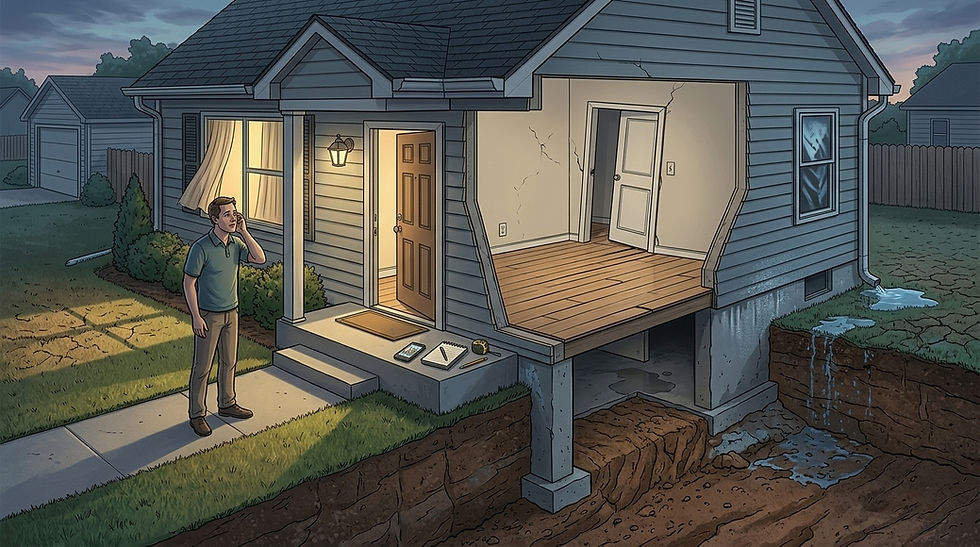
Cracks accompanied by sticking doors or sloping floors
Water intrusion through cracks
Horizontal or structural-looking cracks
These symptoms suggest that the issue may not be the concrete itself, but the soil, drainage, or structural behavior beneath it. And that’s not something a DIY observation can solve.
Remember that while concrete cracks are common, structural failures are not. The key is to learn how to read cracks and understand what’s what’s cosmetic, what’s active, and what’s signaling a deeper issue beneath the slab.
At iFix, we don’t just look at the crack itself, we evaluate the entire system: soil conditions, drainage patterns, load distribution, moisture behavior, and foundation performance. Because in many cases, the concrete is reacting to something happening underneath it.
If you’re seeing widening cracks, uneven surfaces, recurring water issues, or changes that concern you, don’t wait for the problem to become obvious. Early evaluation often means simpler, less invasive, and more cost-effective solutions. So if you’re unsure what your slab is telling you, schedule a professional evaluation with iFix.
And remember that, beyond foundation assessments, iFix offers additional services that address many of the root causes we’ve discussed — including drainage improvements, moisture control solutions, structural stabilization, and preventative maintenance strategies.


Comments