
What is Hydrostatic Pressure?The Dangers It Represents
Hydrostatic pressure is something homeowners should be aware of. Left unchecked, it can cause serious damage to your home’s foundation. Let’s break the definition down into simple terms:
Hydrostatic pressure is the pressure a fluid (like water) exerts because of its weight when it’s at rest.
The deeper you go into a fluid, the more fluid is above you — and the greater the pressure.
Example: when you dive into a swimming pool and your ears “pop,” that’s hydrostatic pressure from the water above pressing on you.
Hydrostatic pressure depends on three factors:
Depth – deeper water = more pressure.
Density – denser liquids exert more pressure.
Gravity – stronger gravity = more pressure.
In short: it’s the weight of still fluid pressing down (or sideways) at a certain depth.
How Does This Affect Homes and Foundations?
There will always be water in the ground around your home — that’s normal and even necessary to maintain soil stability. Trying to remove it entirely would harm your foundation. (We’ve discussed before how drought can also damage foundations.)
Problems arise when water accumulates excessively, especially after heavy rain or in areas with high-plasticity soils, like the DFW Metroplex. Homes near ponds, creeks, or other bodies of water are also more vulnerable.
When enough water saturates the soil, it starts to push against your foundation — whether it’s a basement, slab-on-grade, or pier-and-beam.
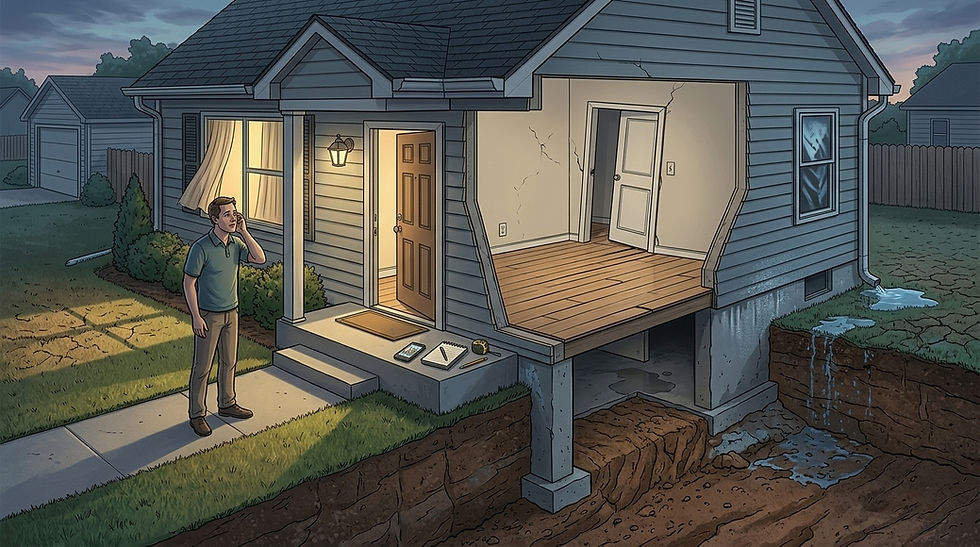
Water, like all matter, needs space. Once it saturates the soil, it tries to expand into the space your foundation occupies. At first, the foundation resists, but as pressure builds over time, it can weaken.
Foundations are designed to handle vertical pressure — the weight of the home above. Hydrostatic pressure, however, is lateral pressure, coming from the side. This is especially problematic for concrete foundations: while concrete is strong, it is also porous, which means water can seep in and through the walls.
Early Warning Signs of Hydrostatic Pressure
One of the first indicators is a musty or damp smell, often in basements or crawl spaces. Moisture is usually the earliest warning sign.
Other red flags include:
Humidity and leaks – water has saturated the soil and penetrated the foundation.
Visible cracks – particularly horizontal cracks, which signal high lateral pressure, or stair-step/zig-zag cracks in brick or block walls, which form along mortar joints.
Bowing walls – if a wall is curving inward, immediate action is essential.
Not all cracks are equal. Random, hairline cracks may not indicate severe structural damage, but horizontal and stair-step cracks are serious. A bowing wall that’s left unaddressed will eventually collapse, leading to costly repairs and possibly making the home unsafe to occupy.
Why It’s a Big Deal
Hydrostatic pressure can rise and fall with changes in soil moisture. After a drought, soil contracts; when heavy rain returns, it expands and pushes hard against your foundation. This back-and-forth movement increases the risk of structural damage.
If water is seeping in, cracks are forming, or walls are bowing, you’re likely dealing with hydrostatic pressure. Services like waterproofing or crawl space encapsulation can help, but if damage is already visible, it’s best to consult a foundation repair specialist immediately.
At iFix Foundation Repair, we know how stressful foundation problems can be — and we’re here to make it easy. Our team is experienced, professional, and ready to tackle any job, big or small. If you’ve spotted cracks, bowing walls, or signs of water damage, don’t wait. Give us a call anytime and let the iFix experts keep your home safe and solid.


Comments