
Why Houses Move
There is a common assumption about houses: ‘If it moves, something must be wrong’. But the truth is all houses move. Today we will help you understand when movement is normal and when it’s not.
But to understand which movements are normal and which are not, we have to understand why it’s moving.
The ground beneath your home isn’t static. It is easy to think of your home as something solid and unmoving. There is concrete, steel, wood, brick and they are built to stay exactly where they are. But the thing is, your home doesn’t sit on something completely rigid. It sits on soil.
And soil…. finds a way. (Cue the Jurassic Park theme). Of course, that’s a joke, but only partly. Because soil is indeed constantly changing. It expands, contracts, shifts, absorbs water, dries out and is ever-reacting to the environment around it.

And if the soil moves, then your foundation responds.
The key thing to figure out is that not al soil behaves the same. And in many regions, such as DFW and other clay-heavy areas, the soil is highly reactive to moisture, which means that when it absorbs water it expands, and when it dries out it shrinks.
It is the constant cycle of expanding and shrinking that creates movement beneath your home. Kind of like a really, really big sponge under your house, expanding when wet, contracting when dry.
And this is when seasons come into play. Throughout the year, every year, your home dances to a natural rhythm; the rhythm of seasons and their weather changes:The summer is hot and brings about a temporary drought and with it soil dries out, shrinking and pulling away, which can lead to settlement.
During the Rainy periods the soil absorbs a lot of water, which makes it expand, as well as becoming heavier. This can lead to heaving or pressure.
And the winter with its cold temperatures makes the soil contract. Sure, the movement might slow down, but it certainly doesn’t stop.
Given that these shifts are normal, most houses are designed to tolerate a certain amount of movement, just because it is expected.
Signs of these minor movements are:- Small hairline cracks
Slight seasonal door adjustments.
Minor shifts (that don’t worsen over time)
Often, these are just your home adjusting to its environment.
But, when does movement become a concern? Well, it becomes a problem when:
Uneven Movement.
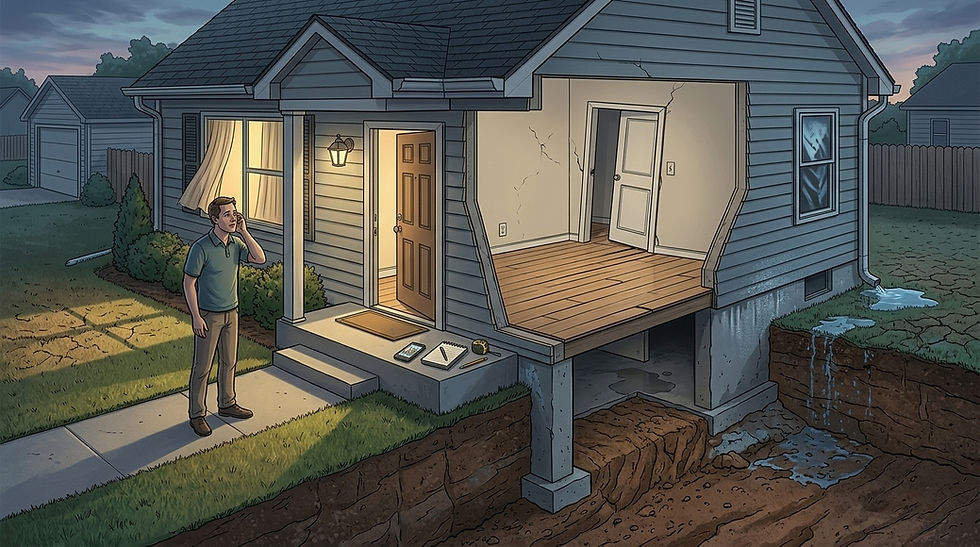
Also known as differential movement or differential settlement. This is when one part of the house moves more than another i.e. the foundation sinks, settles, or shifts at an inconsistent rate.
Progressive Movement.
As the name suggest, this movement causes changes to continue to worsen over time.
Noticeable Daily.
When the changes brought upon by movement are noticeable in daily use e.g. doors stopping to work properly, floors feeling sloped or cracks widening or spreading.
Moisture Issues.
When the movement brings forth moisture issues, like water pooling, soil erosion and persistent dampness.
This is when, just like Dr. Jekyll and Mr. Hyde, it shifts from normal behavior to something that needs attention.
The goal to keep a healthy, sound house is not stillness, but consistent, controlled movement and there are some things that you, as a homeowner can do to ensure this. Focusing on:
Maintaining consistent moisture around the foundation.
Ensuring proper drainage
Extending downspouts away from home
Avoiding extreme dry/wet cycles in the soil.
All of these actions will go a long way in keeping movement within normal range, and the best part of it all is that you can do most of them yourself. We even have handy guides to show you how to do it too!
In short, one key aspect to remember is that movement is not the problem. If Star Wars has taught us anything is that imbalance is the real problem.
So keep in mind that a house that moves slightly is behaving normally, while a house that moves unevenly or excessively is asking for attention, but understanding the difference will give you the wisdom to act upon this.
If movement is starting to affect your home, it may be time to bring in an expert. At iFix, we look beyond surface symptoms to understand patterns and root causes. We evaluate whether what you’re seeing is part of a normal cycle — or the beginning of something that needs correction.
Because while it’s impossible to eliminate movement entirely, the goal is to make sure your home moves the way it’s supposed to.


Comments